You might have seen that I’m freelance editing, and you may have tried to reach me through the contact form on this page. Unfortunately, it was malfunctioning and I didn’t receive email addresses. If you reached out and haven’t heard from me, feel free to do so again. I can be found on Facebook as well.
In other news, I’ve started as one of the poetry editors at OnSpec, and I’m at Reedsy for editing, though you can contact me here for a direct route. Next year will see a new poetry collection coming out.
I’ll be out of contact for the rest of this year but will respond where I can.
Tabitha has chosen to submit some of her writing. Below are two short pieces: “Sacrifice” and “Highway 54” for readers of Women in Horror Month.
Sacrifice
It was that time of year again. My body caught the flu, which sent my mom into a cleaning frenzy. Whiffs of pine cleaner, bleach, and even her homemade disinfectant entered almost every room, letting everyone who entered know that her house was not just clean, but immaculate. I’ve always loved my mother and she was always willing to help me get better. Each day, she used just a bit of disinfectant to take all of the germs away.
From what I’ve been told, I was a happy baby. My parents had the brightest smiles in the room when I was born; but the good times didn’t last. By the time I was eight, my dad got real sick and died. Mom tried her best to make him better, but by the time the doctors helped him, it was too late. The flu they said was the cause. Since then, my mom made it a mission to keep the house clean, so we won’t end up like Dad.
Five drops here, five drops there, Mom used her disinfectant. I had become used to the smell of lavender and lemon, which was always more soothing than the pine and lemon. Mom enjoyed when I complimented her on her cleaning and creativity, so she would make my favorite soup.
Chicken noodle. Smelling the rich, warm broth fill my nostrils always made me feel instantly better before I even tasted it. Bit of carrot and potatoes to make sure that I got my vegetables, and chunks of chicken. Every gulp made me smile even more, and made Mom very happy. But one day she wasn’t as happy. She told me she just missed Dad and how she ached for his love. I knew that she missed him, which I shared too, and she promised that we’d all meet each again someday.
Mom said it had been two weeks and I was still sick. My cough was getting worse, making Mom more concerned. More soup, more cleaning. The scents became heavier, but she said she wasn’t cleaning hard enough. From two times a week to almost every day, I heard the rag in the bucket or the sink and Mom’s voice hum a tune. She said she was having another one of her “days,” so cleaning happened every hour and she started making nothing but soup for me.
Although I didn’t mind, my taste for the soup started to wane. Mom hated when I complained and said soup was going to be my only meal. I hated making her mad; it made her clean more. Gulp by gulp, the soup became almost inedible, but I had to be grateful for what I had, which included the love of my mother. After all, I was her only child. The taste of lavender hit my lips and she explained that it was a new twist on the soup to make me more relaxed; but all it did was make me cough longer. Perhaps I was allergic to lavender but all I knew was Mom’s standard five drops of disinfectant became daily capfuls of usage.
Perhaps my immune system wasn’t strong enough to fight off the cold, and I reunited with Dad. Perhaps I wasn’t Mom’s love after all, especially once Dad’s and my life insurance policy dropped into her bank account.
Highway 54
Brown teddy bear with standard stitching and right eye removed, soaked from the rain on Highway 54. It was then his life changed. It was only a few miles from where he figured that for once his life would finally come back together, but during that moment it was replaced with fear, something that he never knew until he looked into the eyes of his son. Everything except the smells were a distant memory. The smell of the air thickened in his nostrils as it happened, the smell of the rain kissed with humidity, and the smell of blood. From his lips and nose to his glass covered car seats and his son, the scent was all around him, a constant reminder of that particular moment.
As he clutched the now tattered teddy bear in his arms, he tried to forget, but it was inevitable, the final moments in the car with his son were still there, including the tiny shards of bloody glass hidden in the creases in the road. Blue and red lights were in the distance, and as they came closer, it sank in. He wanted nothing more than to have the love of his life back, their lives filled with laughter and love. Improper placement of the car seat is what he would tell the police. He had no choice, it was the only way he could keep his marriage.
Tabitha Thompson is a lover of writing words that become horror stories, reading, coffee, rock music, and video games while residing in Florida as a college student. Her work is featured in publications such as Sirens Call Publications, JEA Press, and Mocha Memoirs Press. When she’s not writing, she spends time with loved ones. Always inspired, always creating.
Sometimes, people ask me, “Why do you write what you write, Katie Berry?” I usually respond, “I don’t know.”
The question is a good one. I have always loved reading horror stories and fantastic fiction. My earlier forays into the unknown and unseen came through the works of such legendary writers as H.G. Wells, Jules Verne, Sir Arthur Conan Doyle, Joseph Sheridan Le Fanu, and Bram Stoker, amongst others.
It was when I was in my middle teens that I discovered more current writers, such as one with the last name of King, and also a gentleman named Koontz. It was overjoyed to find this amazing treasure-trove of phenomenal tales conveniently located under the letter “K” in my local library. After that, I delved into writers who don’t have a last name starting with “K” and discovered such greats as James Herbert, Graham Masterson, V.C. Andrews, Robert R. McCammon, Anne Rice, Gary Brandner, Michael Crichton, and the list goes on.
But that is more of a who’s-who instead of an explanation as to why. Sometimes, at this point, someone will ask, “Maybe it the environment in which you were raised? Or perhaps it’s a genetic predisposal due to some childhood trauma?” Fortunately, there was very little trauma in my actual physical environment during my early years that would have triggered my predisposition toward horror. I think really think that distinction would have to go to my mother, bless her little heart. However, where she got it from, is anybody’s guess.
As a child, I shared her enjoyment of classic horror movies from the ’30s, ’40s, and ’50s right up into the 1970s. Universal’s Monsters were our favourites, along with the Hammer Films of the fifties and sixties and the Corman-Price pictures from the same period. This was around the same time I discovered reruns of Dan Curtis’s The Nightstalker on the Late Show on CBS. After seeing that show, I wanted to be an investigative journalist, just like Darren McGavin. I actually took journalism in college, and though I never worked for a news service, the research aspects that I learned through those courses have been something that has aided my writing greatly over the years. I had also begun reading some of my brother’s old comics, such as DC’s The Witching Hour, House of Mystery, etc. And though too young to appreciate the original EC Comics of the ’50s, I was able to enjoy them through reprints I came across in later years.
Comedy mixed in with the horror is something I remember enjoying very early on in life. And so, it was inevitable that Mom and I also watched Abbott and Costello Meet Frankenstein, then The Wolfman, followed by The Invisible Man. Humour and horror mixed together have always held great fascination for me. I find that the two go together like a fine wine paired with a lovely aged cheddar (or yes, chocolate and peanut butter)—just the right amount of each is a very pleasurable experience. When I write, I try to inject a little levity into all of my stories. I find the moments of lightness help to enhance the moments of darkness, so it’s really a win-win for me!
This isn’t to say my writing is outright horror-comedy or anything like that, far from it. But I feel that nothing beats a good chuckle after having the crap scared out of you, as I am sure many of you might agree. According to some readers of my stories, I have succeeded in that regard. And that, for me, is everything. To know that I have helped someone get away from their everyday life, if only for a few hours at a time, and step into another world filled with thrills, chills and chuckles is a wonderful feeling, and I feel very blessed to be able to do so.
I like the analogy that a good horror story, or any dramatic story for that matter, is like a roller coaster ride. You have your peaks of excitement and dips of despair, along with some curves and corkscrews thrown in for good measure to keep things interesting. The sort of story that, when you put the book down, you have that same feeling of excitement and regret that you do exiting the rollercoaster, that it was overall too quickly.
If a writer can give that ride to a reader and add in some believable and relatable characters, they will have succeeded. As one reviewer said of my novel, CLAW, “What a great adventure! Loved the characters, the creatures, and the humor of this great story. Everything felt so lifelike. This is one of those books that you don’t want to stop reading and pull you in deeper and deeper from page one…”
That comment is the kind that makes my long hours, lack of social contact, and sleepless nights, all more than worthwhile. If you tell your tale well, and you’ve done your job, you’ll scare the bejeesus out of some unsuspecting reader and perhaps even make them laugh a little at the same time. It is the ultimate compliment for any horror writer.
However, I will say this for sure; I do not view what I do as a job. Writing is a lifelong passion that I have fortunately turned into a career thanks to years and years of practice before even thinking of publishing my first novel. These days, I am fortunate to look forward to the morning slog to the office, even if it is only over to the next room; a place where I can dream as I write and then turn those dreams into an exciting, and hopefully terrifying reality for my readers.
In parting, I would like to thank Colleen Anderson for the opportunity to write a few thoughts for her blog today. It has been a pleasure to talk of writing and horror in general like this. In the future, I hope some of you reading this might consider visiting a small fictional town located near me in the Kootenays called, Lawless, BC, home to CLAW: A Canadian Thriller. Or, if something a little less outdoorsy is more your style, then perhaps you might want to consider checking-in for a stay at my latest creation, the Sinclair Resort Hotel, the location of my upcoming novel, Abandoned, releasing this month. Until then, I hope your frights are filled with fear, and that your thrills have plenty of chills.
Katie Berry is a Canadian Author of Thrillers. Born and raised in Ottawa, Ontario, Katie moved west to British Columbia during a family migration that occurred during the later half of the 20th century.
A long-time writer and voracious reader, Katie enjoys a variety of creative and recreational activities when she’s not absorbed in the written word. With many years of keyboard experience, Katie is an avid digital musician, and has been involved in several musical theatre and stage productions in the beautiful West Kootenay region of BC over the past few years.
An eye for detail helps Katie capture many magical moments with her camera as she interprets the natural beauty of the world that surrounds her through its lens. Always looking for something new to advance her artistic experimentation, Katie is also an accomplished sketch artist. She specialises in detailed drawings of friends, family and fur-babies, such as cats, dogs and the odd ferret.
After a lifetime of experience in numerous fields of endeavour, Katie now spends her days, and most nights, doing what she loves, bringing stories to life for people who enjoy a tale where the everyday suddenly becomes something much, much more…”
My guest today is Miriam H. Harrison. Like many readers and writers of horror, it is not a genre that presents unrelenting terror, but is a place from which people can heal from the real-life horrors in their lives.
Horror and Healing
Growing up, horror wasn’t a genre or an escape, but a word too close to home. I didn’t need prescriptive plot arcs or three-act sequences. Life itself was a series of rising tensions, fleeting denouements, and inevitable crises. It wasn’t as tidy, though. Writing gives you a chance to clean up the edges, tie up loose ends, find closure. Life just makes a mess. But in life as in writing, there’s room for rewrites, edits. For a time living was horror, but later, horror was healing.
Horror intersects with all forms, all genres, so it’s little wonder I found myself stumbling into it. Anything you pull deep from your soul can draw breath in the dark and surreal—horror leaves so little out of bounds. It is a wide open space to roam, to explore dark corners and re-imagine the familiar.
For me, writing horror brings together surrender and control. Surrender is the art of facing the blank page. There’s a vulnerability to giving over to the words, to seeing what emerges from your shadows. The memories that live deep inside can be frightening, yet light has a way of shrinking shadows. Unchallenged, the shadows spread deep and wide, whispering from every side. Shrunk down in the light of day, those ghosts can be captured in vessels of words. In words, there is control.
Control comes in many forms, but I have come to value it most in a red pen. Ghosts exorcised into words can be given closure. In editing and rewriting, we get to shape what came before, give it new meaning, new purpose. Here we can find the context and resolutions that life so often denies us. We cannot edit what is not written, but we are not unwritten. We are messy, and editing loves a mess.
This month, I invite you to celebrate both horror and healing. We all have healing journeys to navigate. For anyone living with unresolved trauma, this is not a journey to face alone. Bringing someone else into your process is a different vulnerability, but better than facing that pain alone. Mine was a common story. During Women in Horror Month—and every month—countless women are living in fear. Many turn to shelters or friends for safety. This year those opportunities for escape are fewer, but the needs are still there. As you look to support women in horror, think also of the everyday horrors women face and what you can do to help make healing possible.
Miriam H. Harrison writes to keep her fingers warm in her Northern Ontario home. She studies full time, works on the side, writes when she should be doing other things, and trains the dust bunnies to fend for themselves. She is an Active member of the Horror Writers Association, and any updates about her published works can be found on Facebook (https://www.facebook.com/miriam.h.harrison) or her website (https://miriamhharrison.wordpress.com/).
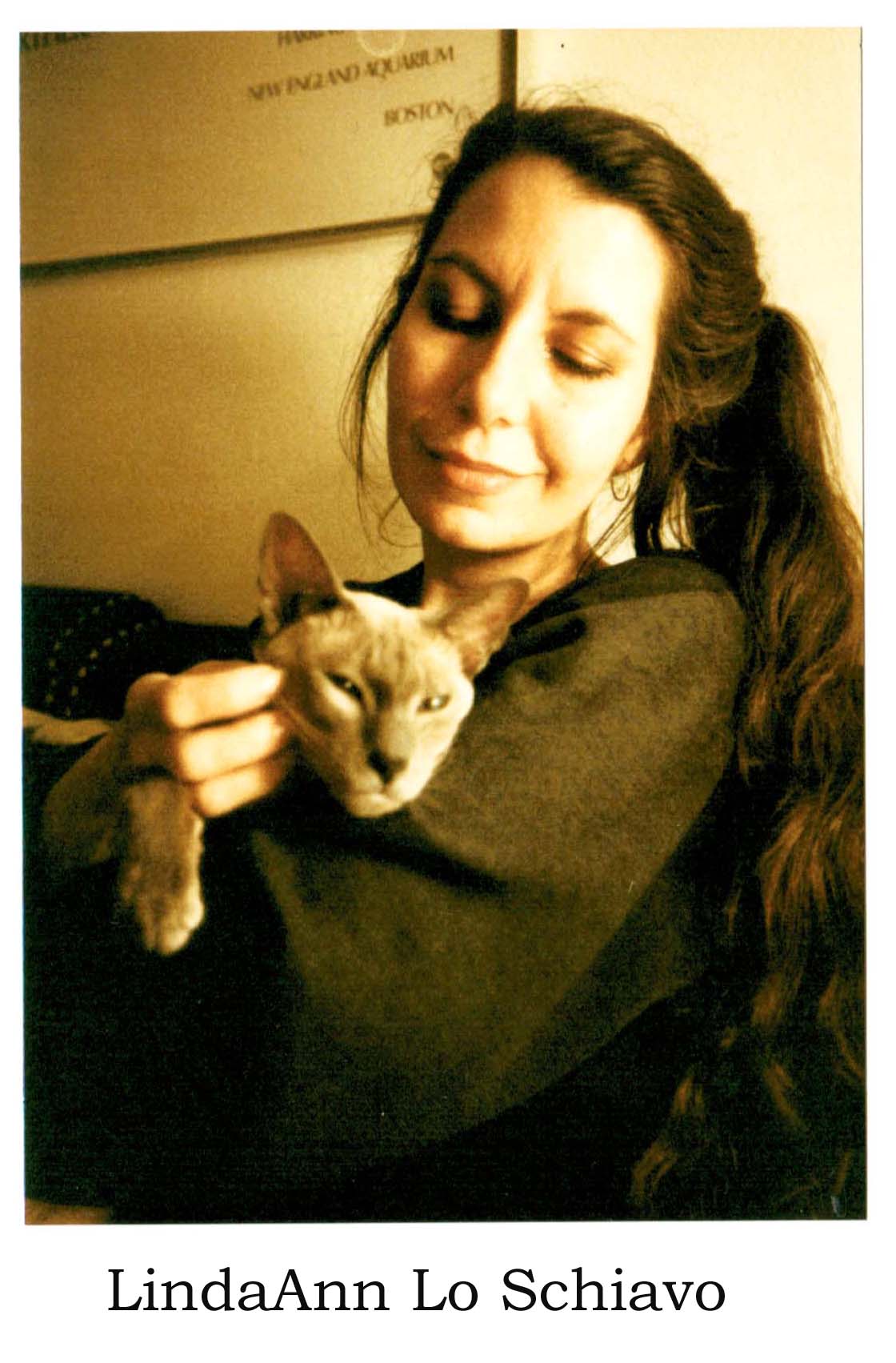
Today, from New York, I introduce LindaAnn LoSchiavo, writer and thinker. LindaAnn was nominated for the SFPA’s Elgin Award last year, for a collection of poetry. She has many works to her credit.
Handmaiden to the Dark Side
A bogeyman, like the one lying in wait under your bed, is likely to be unprepossessing. Beauty in folklore reflected inner worthiness, kindness, and morality. Conversely, fantasy’s evil-doers―goblins, trolls, demons, and miscreants―are born beastly: grotesque, misshapen, stunted, lacking sex appeal.
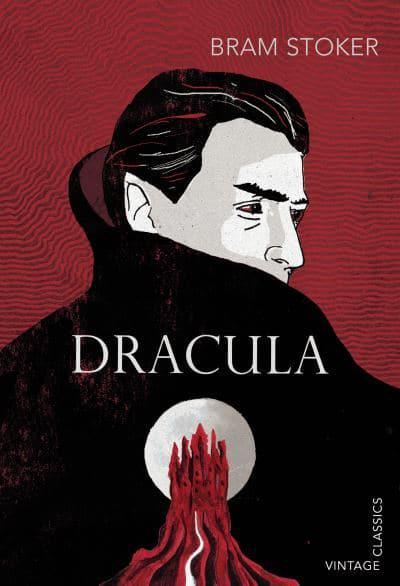
Tweaking that stereotype, Bram Stoker [1847-1912] decided to depict his iconic bad boy and animated corpse as a humanoid shapeshifter, erotically charged, his fangs coexisting with a sensual mouth. A charming cosmopolitan, Count Dracula is a tall, strong, mature aristocrat with the ability to regain youthfulness via blood-sucking. Stoker’s wealthy Transylvanian confirms his passion for real estate and ancient architecture, explaining, “A new home would kill me.” He’s courtly, too, holding the door open―for his guest’s untimely departure.
Our favorite creature of the night.
Dracula, the 1897 bestseller that’s been a model for supernatural horror writers, is one of the titles that thrilled me during my formative years. I read prodigiously as a child, one library book a day, memorizing poems and whatever caught my fancy.
Introduced to grand opera as a toddler, and taken to Broadway shows since I was four years old, I was not shielded from menacing adult themes onstage. For instance, since I had devoured Henry James’ gothic horror novella The Turn of the Screw as an elementary school pupil, I was taken to a performance of Benjamin Britten’s chamber opera adaptation. It featured two evil spirits who prey on the children; sexy, demonic Peter Quint and his cohort Miss Jessel, whose beautiful costumes and vocal chops dispelled some of their inherent Jamesian monstrosity.
Narrative and drama padded my girlish dreams. At nine, I had a poem accepted for publication and staged my first one-act drama in New York City (adapted from Alcott’s Little Women), my script typed six times for cast members. My nine-year-old self never heard of the sleight-of-hand trick of photocopying.
Whether writing or reading, what captivated me were the transgressive characters, who dared to be different, whether it was Jo March, Queen of the Night, Peter Quint, or Count Dracula. But whenever I put pen to paper, unlike Bram Stoker, I gave villainy a long leash. No intrusive vampire hunters in my stanzas.
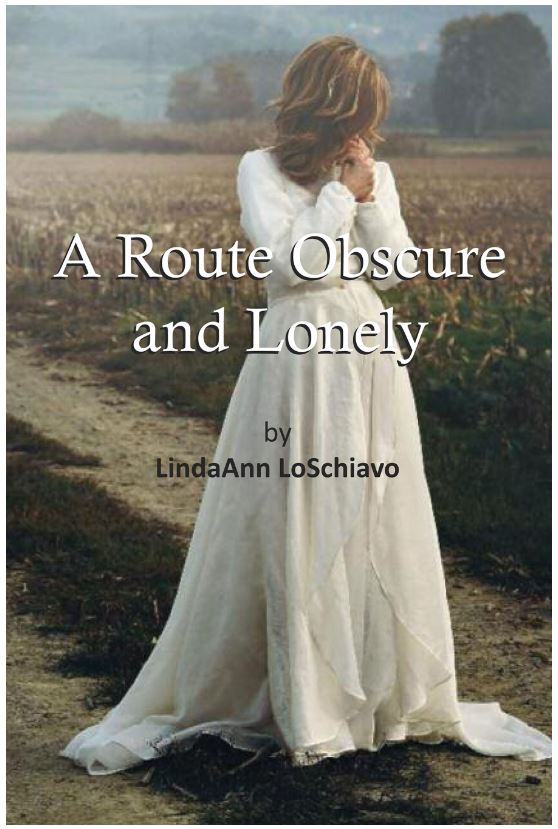
My speculative poetry collection, Elgin Award nominee, A Route Obscure and Lonely [Wapshott Press, 2019, 62 pgs.] dances to dark music, featuring, for example, Black Sabbath rites, sinister deeds, and the Grim Reaper, who’s kept busy.
Two of my poems focus on vampires and what they vibe to: real estate and rejuvenation. “Unquiet House,” a dramatic monologue, is voiced by a vampire, posing as a house-hunter.
  Unquiet House

 Dilapidated house. The broker’s keen
 To pitch the property to newlyweds
 From out-of-state, which we pretend to be.

 Maria’s chatter is distracting him,
 Eyes showing gleams of true engagement, winks.

 I slip out ― for a photo, I explain ―
 Meticulously cautious. Quiet shoes.

 How many bargain hunters have been here,
 Inspecting dirty cellar walls for clues
 Of water damage, not suspecting mold
 Is not the worst homeowner’s legacy?

 The deck is clouded. Spiders overhead,
 Suspended from dead vines, await a broom
 Knifing through filaments spun secretly.

 Unnatural deeds carry threads forward
 Like the black widow spider, breast-stroking
 Through gossamer voids under ragged moons.

 Sweet blood’s in undiscovered special rooms,
 Unconquerable sorrows tendon-taut.

 The “For Sale” sign nods back and forth as if
 It recognizes me through my disguise.

 No longer called a conjuror, my steps
 Still carry the pulsations of lost hearts.

 The agent doesn’t realize what’s right
 Behind him, why he must be sacrificed.

 Maria’s eyes meet mine, a message swept
 Across in spidery blinks of eyelash.

       The undead must have dreams for which to wait.
Of the thirty-three poems in A Route Obscure and Lonely, twenty-six were written in 2019 for this collection and composed with some symmetry. For instance, “The Mermaid’s Lament” was paired with “What Mother Failed to Mention about Dating a Mer-Man;” a chant royal “Persephone in January” was mated with a dramatic monologue on Persephone’s abduction “The Son-in-Law from Hell;” “Samhain” set on October 31 was offset by a spookier vision inspired by Mussorgy’s 1867 orchestral tone poem: “Night on Bald Mountain, St. John’s Eve, June 23.”
Then, ready for another round of vampire versifying, I retrofitted Dracula as a player in a Regency romance in the vein of Jane Austen. The first line of Pride and Prejudice―about “a truth universally acknowledged,” inspired the epigraph to “The Tale of the Vintner’s Daughter.” Her family’s vineyards depend on sun, whereas “he shuns daylight, potato-like.” Could Dracula’s real estate portfolio be date-bait?
           The Tale of the Vintner’s Daughter

                         “It is a truth universally acknowledged that a foreign bachelor,
                         in possession of a drafty castle, must be in want of a wife.”

 She overheard her parents mentioning
 A vast estate, long vacant, just changed hands.
 Inheritance. Fortunate foreigner,
 Related distantly. A gentleman ―
 Aristocrat ― whose bloodline staked his claim,
 Will take possession soon of Mount Ardeal.

 Townsfolk with daughters gave approval, sight
 Unseen. A bachelor! Well-circumstanced!
 Considering an heiress gets respect
 At any age, she was insulted when
 Her father dared to call her “an old maid.”

 Inspecting manicured and chaste white hands,
 Aware there’s merit in matched wedding bands,
 Realities of warring unmet needs
 Upbraid the tight lips of virginity.

 Receptions will be held, bite-size buffets.
 This heir, unknown, is suddenly “a catch.”
 The vintner’s daughter can sense life’s about
 To change once she’s in a relationship.
 Enchanting friendships could lead to courtship.

 Her early childhood memories were filled
 With bone-dry men admitting they had come
 To slake their thirst, which is unquenchable,
 She learned, while watching mother pour and pour.

 Vacationing at vineyards tutored her.

 She watched the women kneeling to tie off
 Vines ― how their expertise was in the knots
 Not grapes ― enduring, bending, bowing low,
 And salving calloused hands at quitting time.

 Admiring the fruitfulness of their
 Harvest on horseback, they see an ornate
 Black carriage pass, its curtains tightly drawn.
 It must be him, the heir they’ve heard about.

 Born in Romania, this bachelor
 Inherited five castles, acreage.

 Unlike the grapes, their ripening athirst
 For sun, he shuns daylight, potato-like,
 Basks in his soft cocoon of native soil.

 Their fete won’t start till red horizon’s drained
 And autumn air’s electric with decay.

 Assuming his disguise, Count Dracula
 Arrives, polite, attired properly,
 Seductive, well turned-out considering
 He can’t see his reflection. Mirrors won’t
 Hold him. Avoiding long engagements, he’ll
 Tell ladies he prefers to sleep alone.

 Echolocation guides his strong black wings
 To candle-lit bed chambers. Milky white
 Breasts, pleasure’s playthings, don’t stir his manhood.
 Sharp fangs seek virginal smooth necks. Always
 His type, blood’s sustenance is what he craves,
 Imagining the process from the grave.

 He’s parched when entering the ballroom.
 Delaying satisfaction sweetens it.
 Unmarried females study him, inspect
 His gold ancestral jewelry engraved
 Impiously. Flirtatious words affect
 The vintner’s daughter, nodding glassy-eyed,
 Intoxicated. His gaze penetrates
 Until she’s under his hypnotic sway.

 The heiress has arranged to meet the Count
 In private. At eleven they will mount
 Their horses, undetected, take a ride.

 Discreet, she’ll hide in the orangerie,
 Alerting him to the romantic grove
 By a rose-petalled trail, a daring ruse.

 Excited to imagine his caress,
 The dark dissolving inhibitions, she’s
 Startled by flapping wings overhead.

 Peculiarly, her petals were consumed.

 Spotting a white handkerchief on a chair,
 She rests her rosebuds there ― a silent prayer.
Dark poetry is not a road to warm refuge. Death occurs often in these pages and never in service of a higher purpose. Yet contemplating the eternal quietus is bracing. For away from the abyss, all height’s revised.
The last few years I’ve featured female writers and did a set of interview questions for February’s Women in Horror Month. Last year I focused on poets. But this year, well, we have everyone living in horror and my juices have been sucked dry. This horror is more a slow building of dread and fear in the Lovecraftian sense as we live through the unending pandemic, the small blips of hope, the plummets of despair and fear, the isolation and feelings of insignificance and dread. Sound familiar?
If there is one good thing to be said of a global pandemic, it’s that everyone can understand what people are feeling no matter where in the world they live. We’ve been holding our breaths so long, hoping this will end, that we’re passing out from it and waking with brain damage and to discover that the living horror has not ended. We’re still in it. There is no place to escape to. Who needs invading aliens when the alien virus is among us? There is no massive conflict for space but inner conflicts of people enduring in silence.
Many people are living in prisons called care homes, or even their own homes. We all wear masks into banks, at airports, in stores, when just 2 years ago you would be arrested for doing so. When and if this virus is under control with a vaccine and if it just doesn’t spawn a new variant, the repercussions on global economy, mental and physical health will be seen for a long time to come.
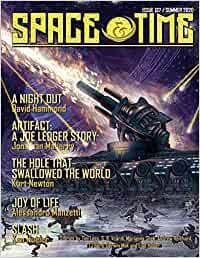
Now, if that isn’t a horror we can relate to, I don’t know what is. Some writers have probably been hit with crippling malaise (as has the world) while others struggle on. I know that in an isolation I’m not handling so well, and coupled with grief of losing 2 family members 2 consecutive years before covid, and with feelings that I’ve become a ghost and a criminal, I have turned to writing to handle the gaping, hungry maw of loneliness. Is it any surprise I’m writing poems about becoming invisible, and about apocalypses? “Divinity in the Afterglow” was published last year in Space and Time and was probably one of my first pandemic apocalypse pieces. We are after all, informed by the world in which we live, even if we imagine other times.
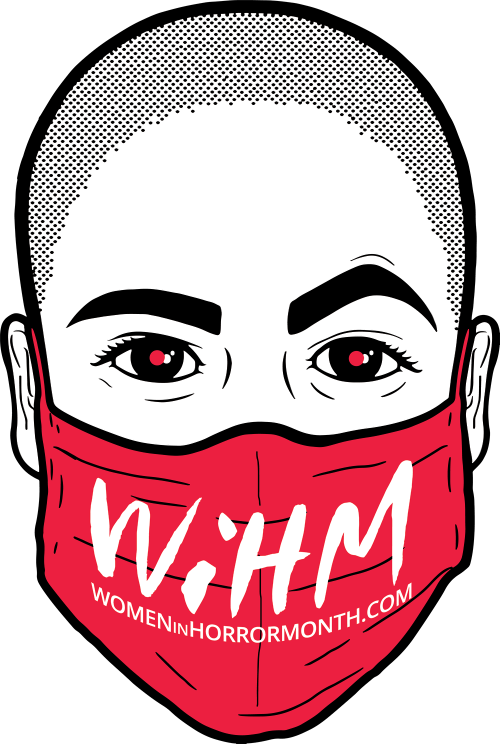
The image for this year’s Women in Horror Month says it all. The hottest fashion item of 2020 was a mask. Everyone has one, young or old. We might have many. I should be talking about my writing here, as a woman in horror, and to feature our works. I should have done it months ago. I should have post this on Feb. 1, but the creeping malaise takes its toll. We’re experiencing covid fatigue with feelings of despair, sadness, confusion and anger. This SF horror movie isn’t ending and who knew that the greatest antagonist would be boredom?
I will be featuring a few women through this month, so check back. I might even post more about what I’ve been doing. If I can say one thing about writing; it’s been my outlet as I try to hold onto sanity and funnel my emotions into something creative. Welcome to Women in Horror Month.
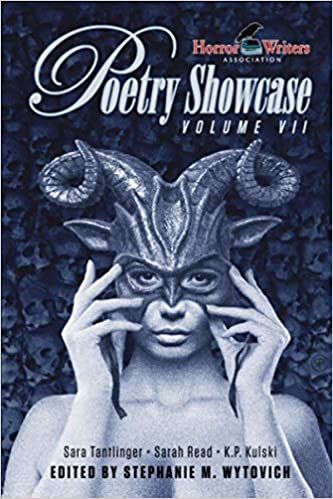
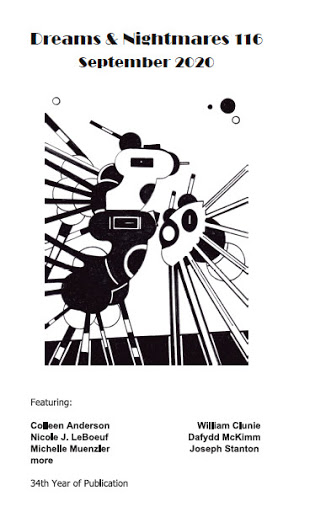
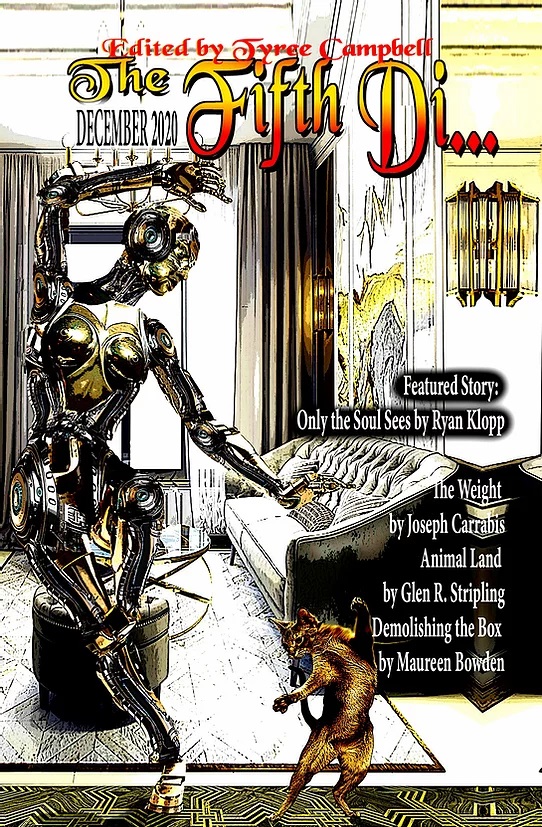
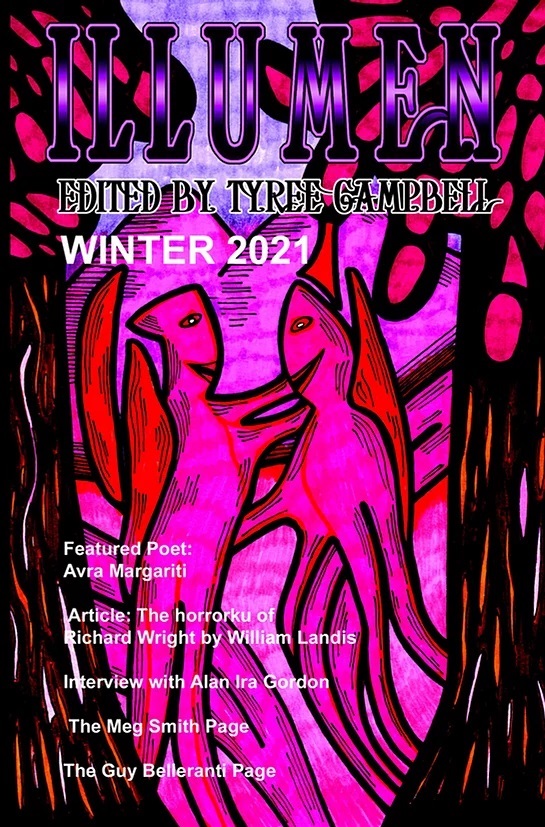
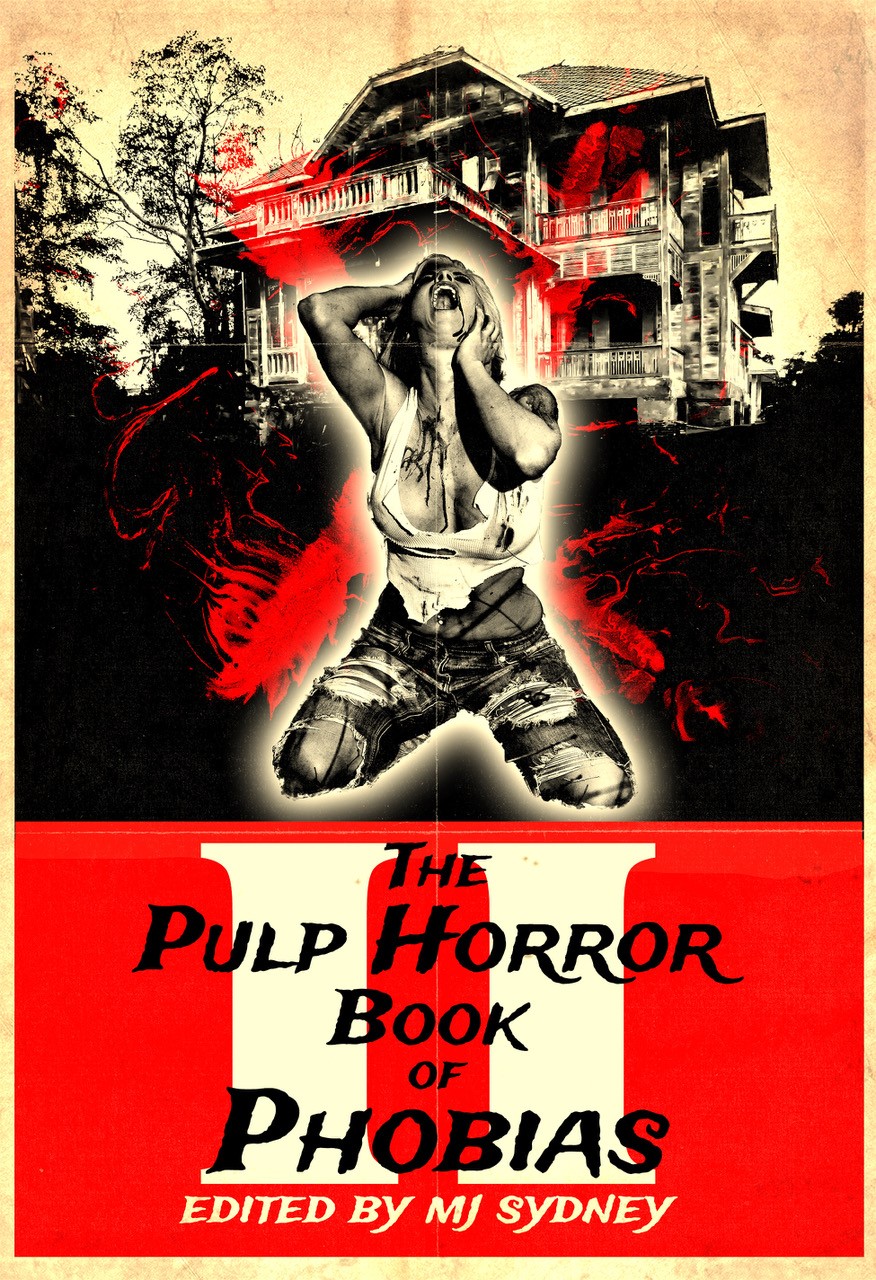
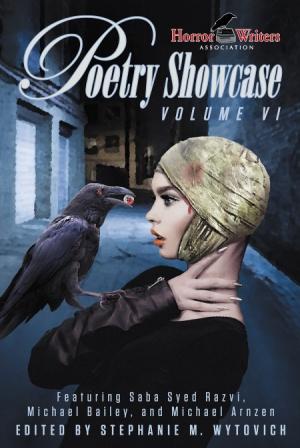
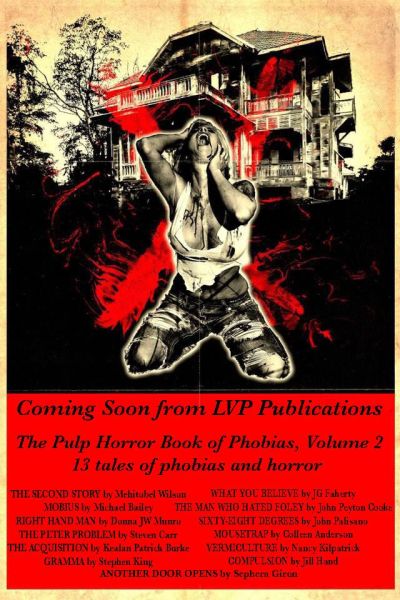
And here are a few publications that have come out in Dec. and Jan. and in which I have some pieces. “The Metallurgist’s Dream” in HWA Poetry Showcase VII, “Telltale Moon,” nominated for a Pushcart Prize in Dreams and Nightmares 116, “Dragon’s Hoard” in The Fifth Dimension, “Offering” and “In Feline Grace” in Illumen, and the phobic story “Mousetrap” in The Pulp Horror Book of Phobias II.
Here in Canada, we’re a small but mighty population. We have many amazing writers, some quite famous, some not as well-known but equally amazing. We write to stave off boredom, the always encroaching cold of the north (remember the North!), wendigos, sasquatch and Ogopogo. And we write to explore and express new thoughts and worlds.
In our mighty little nation, (lots of land and the population of California) we have an active, widespread speculative community. There is written word, spoken word, podcasts, plays, music. Hawksley Workman is a musician who has clearly explored the mythic and speculative in his works (such as The God that Comes). There are numerous examples and I won’t wander down that path right now or I’ll get lost.
We also have the creator of theJust Joshingpodcasts, Joshua Pantalleresco. He has spent quite a few years interviewing writers, actors and other artists and the full list of some 350 plus episodes are here. I met Josh many years ago at a local convention, When Words Collide, in Calgary. He was a veritable energizer bunny, full of enthusiasm, ideas and an inquisitive, friendly mind. Over the years we have come to know each other better and of course I’ve run into Josh interviewing this person or that for his podcasts. He even received an Aurora Award for Just Joshing. He interviewed me back when I was editing Alice Unbound. I like to think of him as Josh Pants to the Rescue, and he would have been a great sidekick for Captain Underpants.
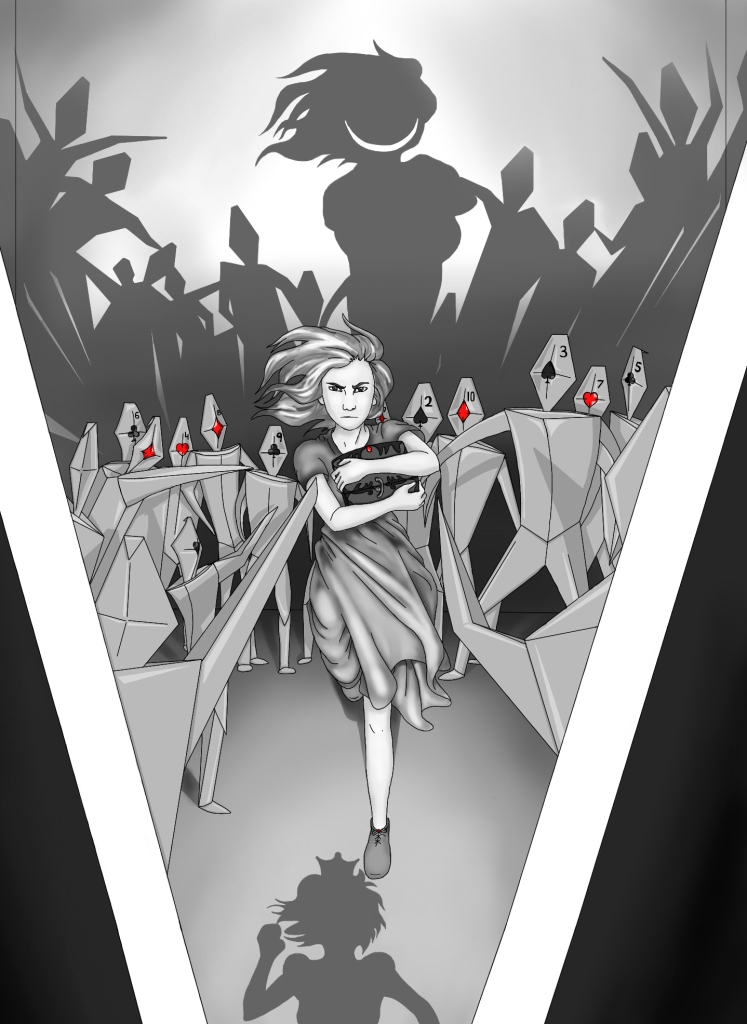
Alice opened the box and was punished for her transgression by being locked away in our world. As a patient in an asylum, her captors are the playing cards, and the ruler of the asylum is a certain black hearted Queen. To make things worse (?) Alice’s only companion has a certain Cheshire Grin. She must escape her current situation, and remember who she is, not only to save herself but to save us all.
Josh also writes, a lot. He wrote an Alice poem for Alice Unbound, but I did not accept it. Professional writers are used to rejection and even from their friends. And editors often have more good stories or poems than they can accept. I remember Josh capturing the madcap way of a Lewis Carroll world. Well, it seems that that challenge also spurred him to even greater things. Josh has now completed a book, Alice Zero. Without further ado, I’ll let Josh speak for himself about his latest project.
It’s all Colleen’s fault.
I mean it. It was her idea. Kind of. Sort of.
Colleen had this great idea for a Lewis Carroll anthology and she invited me to write for the anthology. I was flattered. I said yes. Of course I will write for you. Colleen is an awesome human being with a great gift for poetry and prose herself, and to be recognized is just awesome.
Once I said yes, I realized that I had put myself into a conundrum. What can I possibly say about Lewis Carroll that hasn’t already been said? I mean, I love Alice in Wonderland and knew that I wanted to write something about wonderland. But what exactly?
That night, I went to a bar and remembered meeting a girl with a gorgon tattoo. Now I was eventually turned down because she plays for the other team, but there was something magical about this woman. Not just the tattoo she created on her arm, but she was just an intriguing, artistic, wonderful human being. She’s still a good friend of mine to this day. We talked for a bit, and I promised I’d put her in my story.
The gorgon was something I needed to see. Medusa is a fun character. She is an interesting monster, and beautiful and deadly. In wonderland where up is down and right is wrong, perhaps, she’d be a hero? I imagined a gorgon knight protecting Princess Alice from the depths of the shadows in this weird world of wonderland.
And then I made the magical connection. What if I did a mashup of Alice in Wonderland as Greek mythology? What if Alice was Pandora? It made a lot of sense in a lot of ways and I was so happy. If it wasn’t for Colleen I truly don’t believe I would have met my friend. It wouldn’t have been a problem I needed to solve. I wouldn’t have thought to go to the bar, and I never would have had the opportunity. I would have missed so much.
So I had my story. Greek Alice. And it came to me, this asylum with the playing cards being her jailers and the warden being the Queen of Hearts. Alice is on a quest to find herself. She opened the box, and now must face the consequences of her actions.
I wrote it and had a blast and handed it to Colleen. I was so happy. Then Colleen rejected it. It was her decision, and I understood. The collection didn’t need another Alice story, but I was so happy with my Alice story that I wanted to do something. Some things, actually. Stay tuned for the following year. But I wanted to work on doing something on my own.
I have to admit I got in my own way for awhile. I’ve done the epic poetry thing with Mirror World Publishing and I loved that I got the chance to do so. But this is me again, for the first time. At least this time I got some help. Kenzie Carr is an amazing world class artist. I’m hoping we continue this collaboration as she did some killer things inside. Love her work and was pleasantly surprised how it all came about.
I had other people help out too. Vanessa Cardui did a wonderful job advising me, and I listened to a few others as well. Thank you, all.
Finally, here it is, courtesy of myself and Kenzie Carr. I never would have done it if it had not been pushed in that direction if it hadn’t been for an email from a dear friend. Colleen, it’s all your fault. But I’m so happy you were the catalyst in this. Thank you for being an amazing friend and an inspiration. Keep being you.
Perhaps, Josh gives me too much credit. Without his own imagination and talent, he would not have even created this. But it’s true that we can be inspired and spurred in new directions by others. Josh, I’m glad a tree grew from the sprout. I’ll be reading his work lately to see what crazy things Alice gets into. I hope you considering exploring his worlds as well.
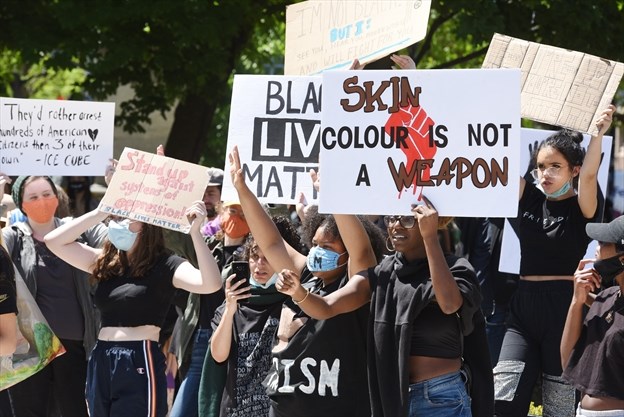
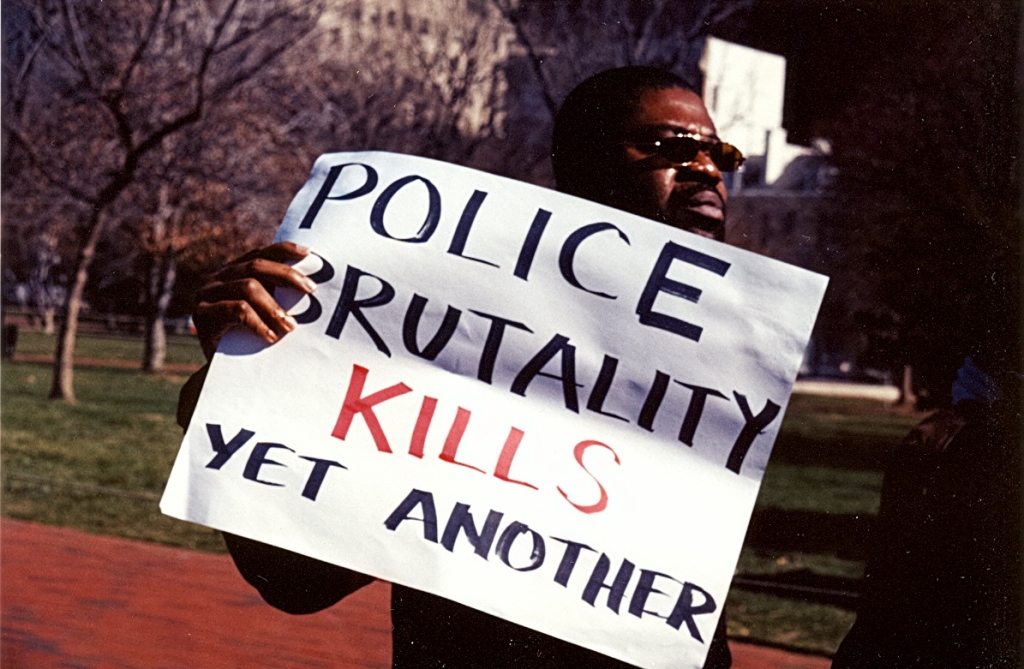
I don’t have a TV and with working from home I haven’t been hearing as much news as before, but even so I know of the riots and protests and yet another murder of a person of color, of George Floyd. It makes me angry. I want to cry and it feels like nothing has changed since slavery was abolished. That’s partly hyperbole because things have changed, but the continual abuse of people of color, the fear under which they live and the treatment of them all as guilty first has not changed. The license to be more racist has certainly been given under the auspices of the racist, bigoted, misogynistic sociopath who is supposed to be leader of the US. But it certainly didn’t start with him and he’s a sign of an ongoing disease.
I live in Vancouver, BC. Canada is known for being polite, being a little more placid than some countries. Port cities throughout the centuries have always been more tolerant due to the many cultures that would flow in and out of the seaports. Though Vancouver is a port city, that does not mean we are free of racism. We have significant numbers of people of Chinese, Indian and Indigenous descent. There are other Asian races as well and black people though their numbers are higher in central and eastern Canada. However, we are naive if we think we don’t have racists and bigots living amongst us. There is still a percentage of people who think their whiteness makes them better than others. What we are though, is more privileged than many people of color.
Last night, in my quiet East Van hood I went down to a local bar for a drink. We’re still spaced for social distancing purposes but around the corner from where I sat at the bar was a woman of color. We got talking about COVID, as one does these days, and then moved off to other discussions of language and culture and countries. She’s a brown woman, born and bred in East Van but her cultural background is from India and Fiji and she identified herself as a brown dyke living in East Van.
I asked her if she’s ever experienced racism or police stereotyping and her answer was, hell yeah. She was taught that the moment you hear the whoop whoop of a police car, you put your hands above your head. She’s been stopped three times by police when she was going home from work. She’s been questioned and searched. She carries a pocket knife, partly because she works in a hardware store and uses it on the job, but it’s not illegal to carry a knife. She’s missed taking her bus home as she sat at a bus stop because police were asking her what she was doing and where she was coming from, and all because her skin is brown.
Taken from a 2014 post at Skepchick Nothing has changed.
I kept hearing about white privilege and didn’t feel that privileged. I’m not rich or elite or superior, but what I have that people of color don’t is that I have never had to worry about being shot, or beaten or questioned because of my skin color. I haven’t had to fear a police car. My parents did not have to teach me to live in caution and fear of the police, those who are supposed to protect all citizens equally. Sure, as a woman, I have to face other fears; that a man might overpower or rape me and I have experienced sexual abuse in the past. But I have not had to face this as a woman of color.
I’ve listened to news interviews and reports of people in other parts of the country and their experiences. In Toronto where there is a larger black population; CBC interviewed people about their experiences and they all had known someone who was shot or killed by police. I told this woman that I almost wanted to be with her to film these intrusions she’s had, but just by being there and being white, I would legitimize her, probably stopping the police from questioning her, which is a terrible thing to have–that a person is not seen a legitimate unless someone else of another class vouches for them. Sounds a lot like slavery, doesn’t it?
I’ve heard the stories where police would drive Indigenous kids to the edge of town in winter and make them walk home, sometimes with inadequate clothing as well. Some of those kids never made it. I’ve heard of Asians in Vancouver being verbally and physically attacked because of COVID 19. It’s here and it’s now.
Not all of this racism is perpetrated by police and not all police are terrible. In fact, I’m sure the majority in most places are good and upstanding people. But when you have a gas leak, it affects everyone in the area. And if you let racism leak in or flood those who are supposed to be upholders of justice and the law, then everything is tainted. People fear those who should be protecting them and there are far too many cases of people in police custody who have died from mysterious or downright blatant cases of violence. Justice stands for “just behavior and treatment.” To be just is to be fair and not be biased in any way.
I don’t believe in painting any one group with the same brush, and that goes for cultures, races, religions or even police. But as long as this blatant racial stigmatizing goes on, it will affect trust and incite anger. I worry about my friends who are not white, and what I don’t even know they have to face. I’ve lived in a protective bubble that I didn’t even know I had. My bubble shouldn’t have to pop but it should be so large that we’re all inside it being treated equal.
When those who have the power to uphold the law are the worst abusers of that law we will erode into a police state, where everyone lives in fear. Right now, for a significant portion of North America’s population, it is already a police state. Black lives matter: stop treating them like fodder.
Well, I don’t think there is much point in singing the pandemic song. This might be the only time in recent world history, or ever, where the world is experiencing the same event at the same time, and we’re all in the same boat. Isolation, depression, sadness, frustration, anger, fear: it’s affecting all of us in different ways. We don’t know if our world will ever go back to what it was and maybe all of it shouldn’t.
I live alone, so I’ve been suffering loneliness on a grander scale than I already did. And I’m lucky; I still have a job that I can do from home. Though I would never have any issue in filling my days if I weren’t working–that is, if I could go out. These days, the big excitement amounts to going to buy food. Like most writers who need some alone time to write, I have that but, like many people, we haven’t seen our production go up as the unpredictable future weighs on us.
The quarantines have cut into everyone’s lives. I didn’t get to be guest of honor at the Creative Ink Festival. Maybe that will happen again in the future, if we have events anymore. I didn’t get to go to Europe or to Stokercon, or bond with friends and writers. So, yes, I too am suffering a malaise.
I have continued to sell various pieces so this will be a catch up post. Back in February, for Women in Horror Month, I had guest poets for every day of the month. I also wrote a guest post for Horror Tree, called “Writing Horror is a Nightmare.” It’s a short piece looking at the hard part of writing horror. Horror Tree for those that don’t know is both a zine that posts on markets as well as has blogs and articles to do with horror. However, all the markets they highlight are not all just horror. I subscribe to the newsletter for market tips.
I have had friends ask me where I find my markets, and I’m a search maven. So I thought I’d add this into the post, also for my friend Vie. Besides Horror Tree, I also check out Ralan.com. Ralan has been running his site for a very long time and it lists specifically speculative markets. He breaks them into pro, semi-pro, pay and token categories, plus a few others. You can run down the list and see who is open and briefly what and when they accept.
A year ago, I started to use Submission Grinder as both a market search engine and to record my writing and sales. I have a hybrid system where I still use index cards for listing each story and poem and where I’ve sent them, plus I put them in the Grinder. I know I could switch to a spreadsheet (which I also use for taxes to list my sales) but I like the 3D aspect of searching for pieces by going through the cards. If you click on the Grinder logo it will show you tabs for Recent Activity, Recently Added Markets, and My Market Response List (the last for places where I have submissions). I check the Recently Added Markets to find new listings. I’d say it’s 50/50 on response since some “new” markets seem to be dead or unresponsive. The Grinder also lets you search for markets by genre and for poetry or fiction.
While those three are my mainstays, there are many others I use. Submittable lets you subscribe to their newsletter and they list callouts for submissions. You cannot tell if they’re paying or nonpaying unless you click on the market. Dark Markets is another one though I don’t find it that easily searchable. There is Publishing, and Other Forms of Insanity, which updates calls by month. Winning Writers is another one that lists markets, as well as contests and which ones are free. Some of these I get as newsletters, such as Funds for Writers and Pamelyn Castro’s Flash Fiction Flash Newsletter. I don’t always intensely study all of these but sometimes I do. And sometimes, I just google search to see if there is anything new. There are more market report sites out there but some of them are dated and therefore list markets no longer in existence. The ones I’ve listed here are the best and I’ve done a lot of searching. There is Duotrope, which is not free but is also recommended by other writers.
Onto other news. I was awarded a BC Arts Council Grant in March. Oddly it was for an application from last year but I’m not saying no to funds for my writing trips. Engen Books in eastern Canada sponsors the Kit Sora flash fiction–flash photography monthly contest. I’ve used the short 250 word entries as a way to continue writing while grieving my bother’s death last year. In Dec. I came third place with “Accidentally, He Gives Her Dreams.” “Dinner Plans,” a drabble was part of the Quarantine Quanta contest in the humor category, and “A Taste of Eden” was podcast on Starship Sofa #625 in Feb.
There have been too many sales to list so, for poetry, I’m posting the ones that have been published:
For now, I’m trying new poetry forms and have sold my first ghazal and haibun. There will be more to post later but if you’re a writer, start bookmarking or subscribing to market lists. And if you can, donate a few bucks.







 Well, I don’t think there is much point in singing the pandemic song. This might be the only time in recent world history, or ever, where the world is experiencing the same event at the same time, and we’re all in the same boat. Isolation, depression, sadness, frustration, anger, fear: it’s affecting all of us in different ways. We don’t know if our world will ever go back to what it was and maybe all of it shouldn’t.
 I’d add this into the post, also for my friend Vie. Besides Horror Tree, I also check out
  Onto other news. I was awarded a BC Arts Council Grant in March. Oddly it was for an application from last year but I’m not saying no to funds for my writing trips. Engen Books in eastern Canada sponsors the Kit Sora flash fiction–flash photography monthly contest. I’ve used the short 250 word entries as a way to continue writing while grieving my bother’s death last year. In Dec. I came third place with “






 Colleen Anderson